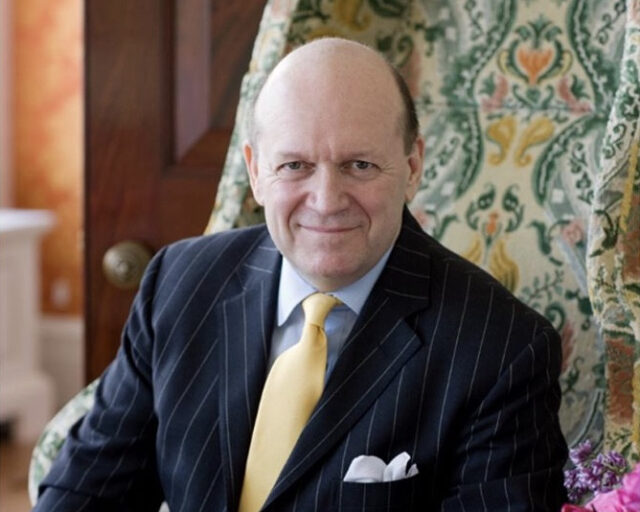
By Christopher S. Hyland
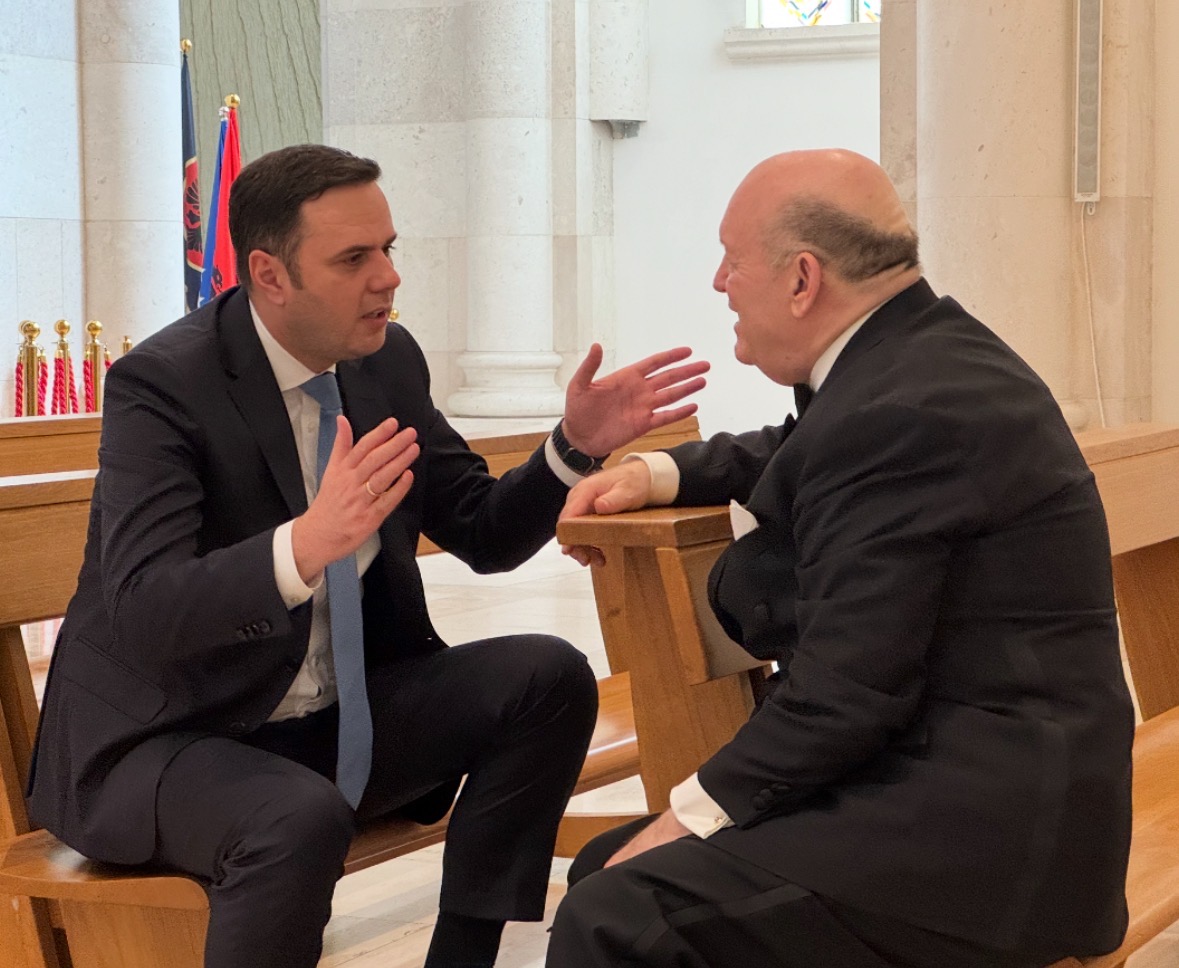
Every young republic arrives, at intervals, at a threshold where it must choose between two definitions of itself — one that seeks the common ground and one that mistakes obstruction for principle — and Kosova, a country I have been supportive of for decades, stands at precisely such a threshold this summer.
Three times in little more than a year her citizens have gone to the polls; three times they have returned Albin Kurti’s Vetëvendosje as the first party of the land; and three times the Assembly has failed at the single task those elections were meant to make possible — the assembling of the two-thirds majority by which a President is chosen. The chair of the head of state sits empty; Vjosa Osmani’s mandate ended in April, and Albulena Haxhiu now serves as acting President.
The coalition talks that followed the vote of the seventh of June — in which Vetëvendosje again finished first, with some forty-seven percent, yet short of a governing majority — have already been suspended, the leader of the Democratic League of Kosova breaking off negotiation amid turmoil within his own party. This is not a crisis imposed from without. It is, to Kosova’s sorrow, a calamity of her own making.
I would submit that the remedy is older than the quarrel, and that it bears a name: Rugovaism.
Aristotle held that happiness is the labor of becoming something greater than ourselves — a human right, and a human obligation, that asks of each of us the cultivation of our God-given gifts toward our best self. That teaching descended, across the millennia, through John Locke and Thomas Jefferson and, in our own age, through Ibrahim Rugova, the founding President of Kosova; and it animates an ethos I have long thought of as the whole of his politics — the ethos of I, you, and we.
Namely, I feel for suffering Kosova; you feel for her as well; and we, together, are bound to relieve that suffering and to reach the solution that relieves it. The politician who withholds his presence from the chamber, that a President might not be chosen, has abandoned that ethos for the comfortable path — which is nearly always the path that feeds discord.
I met Rugova on the thirtieth of March, 1992, in a suite of the New York Hilton, ushered in by Avni Spahiu and by the good offices of Jim Xhema. He sat immersed in cigarette smoke, swathed in a long scarf, and spoke — quietly, as though the thing were already accomplished — of a constitutional future not yet born: an independent Kosova, heir to ancient Dardania, that birthplace of Rome, which would stand, as Jefferson and Adams had wished their own fledgling colonies to stand, as a beacon of hope; a republic ordered by law rather than by feudal grievance, mindful of the rights of every citizen whatever his origin. His was a mind formed by the liberal arts — history, philosophy, mineralogy, aesthetics — patient, nuanced, at ease with paradox. At the door, as we parted, he turned and said the word once more: Dardania. He was himself a portion of the history he invoked, moving, for all its wounds, toward a more equitable and prosperous future.
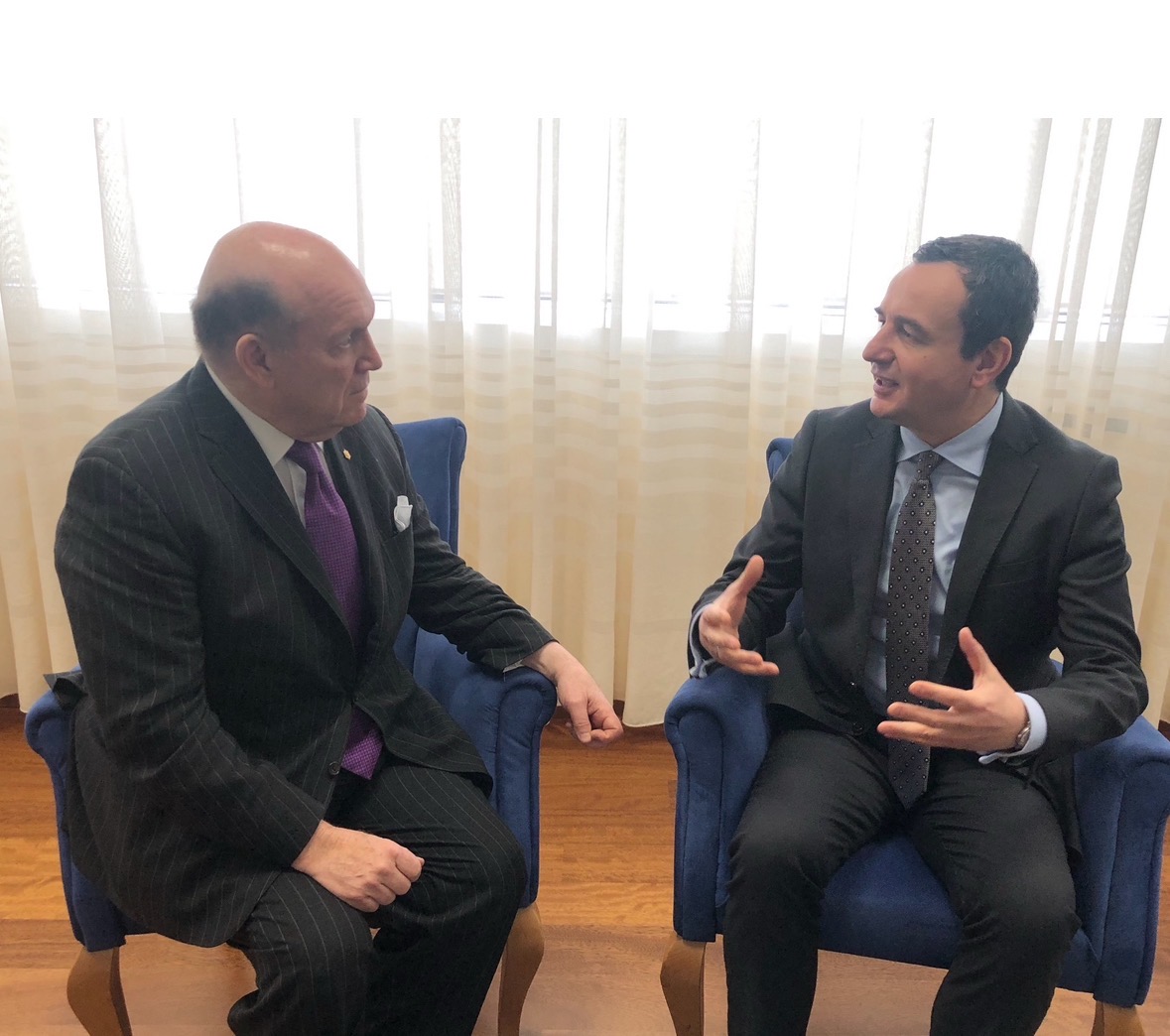
The sociologist Dr. Brené Brown has given us a phrase for what leadership demands in such an hour — “courage over comfort” — and Rugova chose courage nearly every time, even when it was unpopular, even when to be misunderstood was to invite opposition. He labored to prevent what might have been a continuing ruinous clash between certain militant factions and the Kosova Liberation Army. He drew his rivals into the governance of Kosova when he attained the Presidency.
And, most controversial of all, he sought accord with Serbia — not from naïveté, but because he knew the centuries of suffering behind him and the worse suffering that lay within reach should the old pattern of acrimony and recrimination be permitted to run. His education had given him what Dr. Brown would call complexity skills — situational awareness, an eye for pattern, a tolerance of nuance and paradox — which are not solely the ornaments of a cultivated man but the very instruments Kosova’s present crisis cries out for.
The independence that made Kosova possible was won in the arena of history — by Rugova, by the leadership of the University of Kosova, by the valiant citizens and combatants of Kosova, by the indispensable diaspora personified, for me, by Jim Xhema and Ekrem Bardha, among numerous others, by Vehbi Bajrami’s “Illyria” and by Presidents Bush, father and son, and by President Clinton, who would not permit the cause to die.
President Theodore Roosevelt, in his Sorbonne address of the twenty-third of April, 1910, reserved his honor for “the man who is actually in the arena,” who at the worst “fails while daring greatly, so that his place shall never be with those cold and timid souls who neither know victory nor defeat.” The citizens of Kosova entered that arena and thwarted tyranny. It would be a bitter thing indeed to watch them now, the victory already theirs, court a calamity of their own design — not for want of votes, but for want of the will to honor a result.
The parties, each a necessary part of any solution, are now called to thwart their own inhibitions, ambitions, and narrow self-interest; and here the eighteenth-century statesman Edmund Burke instructs them still: “All government, indeed every human benefit and enjoyment, every virtue, and every prudent act, is founded on compromise and barter.” Kosova is neither safe nor secure so long as her politicians refuse that barter and set their interest above the nation’s — a refusal that persists, in some part, because her citizens have not yet held them to account. When opposition leaders withhold the quorum by which a President is chosen, they do not merely frustrate a rival; however inadvertently, they lend their hand to this young country’s naysayers, and there is, in that withholding, a collusion with destructive forces in the air.
The arithmetic of legitimacy translates without difficulty across the Atlantic. Bill Clinton won the Presidency of the United States, in 1992, with but forty-three percent of the vote — four percentage points lower than Kurti’s Vetëvendosje drew this June — and no one in Washington thought the question thereby unsettled. It behooves every party, then, and the Democratic League of Kosova above all — the party that Ibrahim Rugova himself founded — to step forward at last, to form a government with the thrice-victorious Kurti, and to permit the Assembly to choose a head of state.
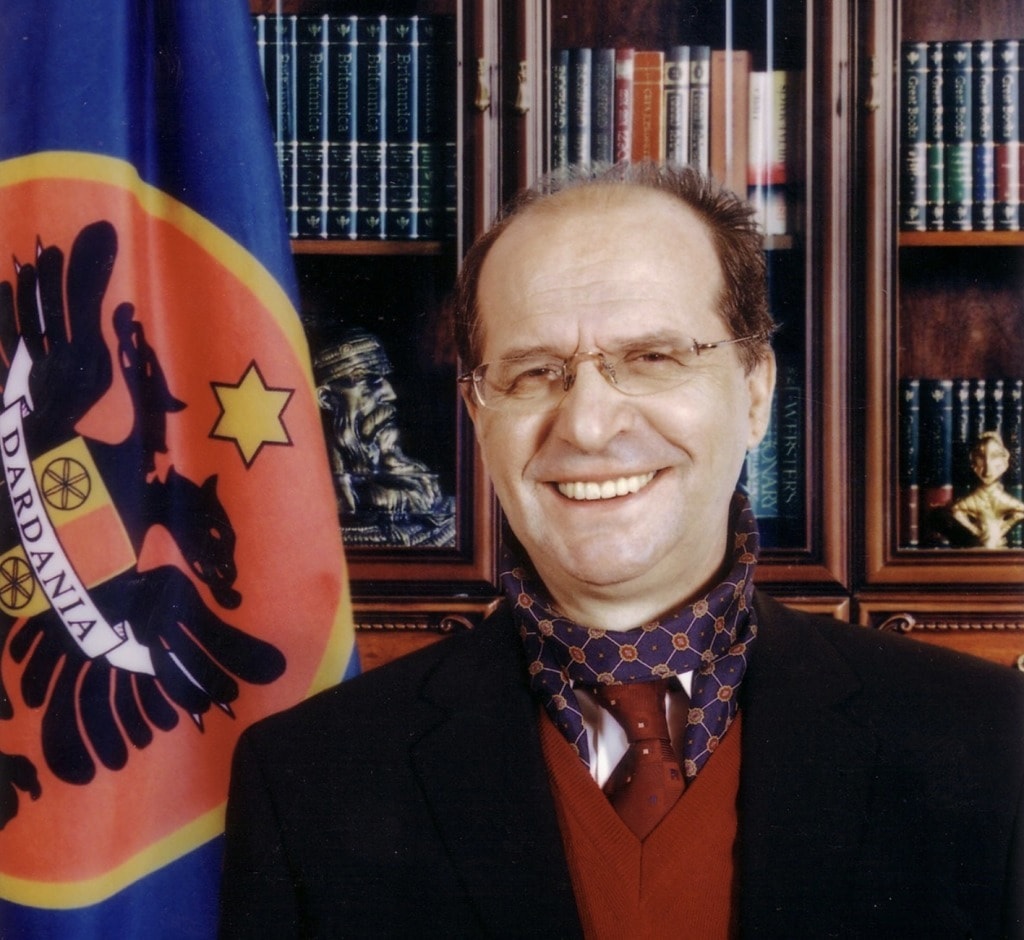
For the LDK to block a government and a Presidency in the name of leverage is no fidelity to its founder; it is the repudiation of his whole method, which was amicable political fusion for the good of all. Ask Uke Rugova, the President’s son, what his father would do, and he will tell you the same.
For what is emerging in this corner of the Balkans is something more hopeful than a quarrel over a chair: the prospect of a Kosova that completes her passage into the European Union, that keeps her sons and daughters at home rather than surrendering them to the sea, and that takes her rightful place, with Albania and her neighbors, in a Balkan Commonwealth founded upon constitutional democracy, religious pluralism, and reconciliation. Let the parties set down their vanity; let the Democratic League honor its founder by governing rather than obstructing; let the Assembly choose the President the constitution requires; and let Kosova show once more, as she has shown before, that her democracy is stronger than the individuals who would hold it hostage.
In the Capitol of the United States are inscribed the words attributed to King Solomon: “Where there is no vision, the people perish.” Rugova had the vision. It falls now to those who claim his mantle to prove they still possess the courage to act upon it. Kosova has entered the arena before. She can enter it now.
Christopher S. Hyland is a veteran diplomatic advisor specializing in Balkan affairs and interfaith dialogue. He served as Deputy National Political Director for Ethnic Constituencies of the 1992 Clinton presidential campaign, has advocated for the sovereignty of Kosova for more than thirty five years, and is a member of The Order of Dr. Ibrahim Rugova. He met Ibrahim Rugova in New York in 1992. He is a recipient of the Gandhi Peace Award and a Saint Patrick for Peace in Ireland.